
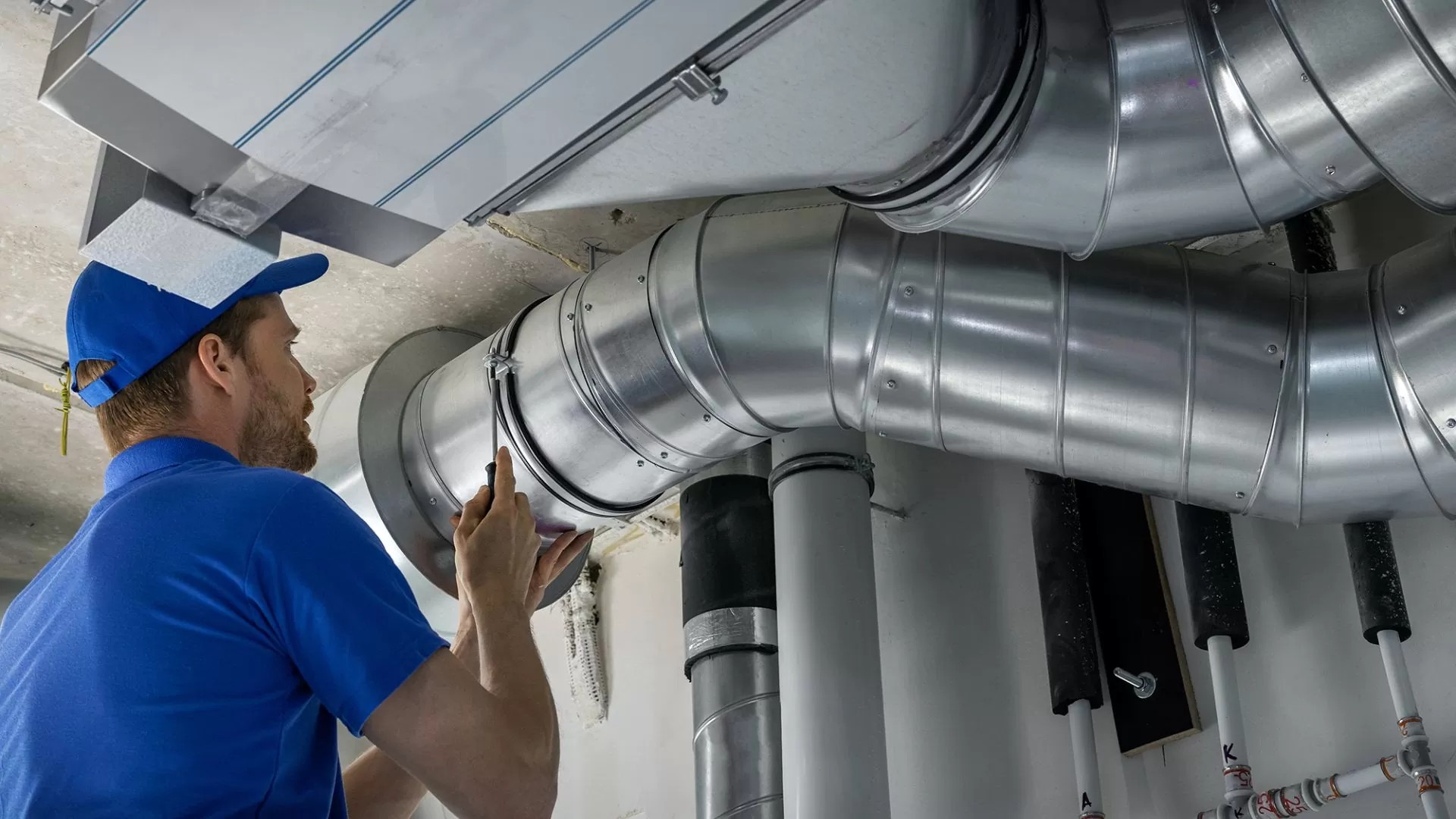
How Often Should You Really Service Your AC in the UAE? (It's Not Once a Year)
A lot of AC maintenance advice online says to schedule a professional inspection once a year. That's reasonable guidance for a system that runs seasonally in a mild climate. It's not accurate for the UAE, where an AC unit can run 10 to 12 hours a day from May through October, roughly 1,800 hours of continuous operation each summer, in some of the dustiest conditions in the region. Following once-a-year advice here usually means the system is already under strain long before the next scheduled visit.
Why the UAE's Climate Is Genuinely Different
Heat and airborne dust don't just make a system work harder, they accelerate mechanical wear, commonly cited as around 40% faster than equivalent systems in temperate climates. Fine desert dust settles on outdoor condenser coils, acting almost like insulation and reducing the unit's ability to release heat. The compressor then works harder to compensate, which is exactly the kind of strain that leads to early failure.
How Often Should You Actually Service Your AC?
Most residential systems in the UAE need professional servicing 3 to 4 times a year, not once. Commercial systems, given heavier and longer daily use, often need even more frequent attention. This isn't an upsell; it reflects how much harder these systems work here compared to a system that only runs a few months a year elsewhere.
What Happens If You Skip It
A well-maintained AC system in the UAE commonly lasts 10 to 15 years, the same range often quoted for milder climates. Without regular maintenance, that drops to 6 to 8 years, due to the combined effect of continuous operation, heat, and dust. The gap between those two numbers is the real cost of treating a UAE AC system like it's running under mild-climate conditions.
Filter Changes Need to Be More Frequent Too
Dirty filters restrict airflow and strain the system regardless of climate, but the timeline shifts in the UAE. Where a 1 to 3 month filter replacement schedule is common advice elsewhere, the UAE's dust levels usually call for changing filters every 1 to 2 months to keep up.
The Real Cost of Waiting Until Summer
There's a practical, timing-specific frustration that's easy to underestimate: by the time an AC starts blowing warm air in July, every technician in the city tends to be booked, since a lot of neglected systems fail around the same time under the same heat. Scheduling a pre-summer service in April, before demand peaks, is usually a matter of a few days' wait rather than weeks.
What's Safe to Do Yourself, and What Needs a Professional
Some maintenance is genuinely fine to handle without a technician:
- Changing filters every 1 to 2 months in the UAE's dust.
- Clearing the outdoor unit of leaves, dirt, and debris that block airflow.
- Checking the thermostat and replacing batteries if it isn't responding properly.
Other tasks need a professional with the right tools and training:
- Refrigerant level checks and leak detection.
- Coil cleaning, since dust-coated coils are a major driver of reduced efficiency in this climate.
- Duct inspection, covered in more detail on InterKraft's HVAC ducting page, since ductwork condition affects the whole system's performance, not just the unit itself.
Frequently Asked Questions
How often should I service my AC in the UAE?
Most residential systems in the UAE need professional servicing 3 to 4 times a year, compared to the once-a-year advice common in temperate climates. Commercial systems, given heavier use, often need even more frequent attention.
Does neglecting maintenance really shorten an AC's lifespan in the UAE?
Yes, significantly. A well-maintained system in the UAE commonly lasts 10 to 15 years, but without regular maintenance that can drop to 6 to 8 years, due to accelerated wear from continuous operation, heat, and dust.
How often should I change my AC filter in the UAE?
Every 1 to 2 months is commonly recommended in the UAE's dusty climate, more frequent than the 1 to 3 month range often advised in less dusty environments.
What can I safely do myself versus needing a professional?
Changing filters, clearing debris from the outdoor unit, and checking thermostat batteries are reasonable to handle yourself. Refrigerant checks, coil cleaning, and duct inspection require a professional technician with the right tools and training.
If duct condition or airflow is part of what's affecting your system's performance, InterKraft's HVAC ducting service covers design, installation, and inspection to SMACNA and DW144 standards.
Emma Davis
This article is a fantastic resource! I had no idea that regular duct cleaning and maintenance could have such a big impact on air quality and energy efficiency. The tips on choosing the right system and investing in a smart thermostat are exactly what I was looking for. Great job making HVAC systems easy to understand!
Liam Brown
The emphasis on energy efficiency and SEER ratings really caught my attention. As someone planning to replace an old HVAC system, this guide provides clear, actionable advice. I also appreciated the section on professional maintenance—definitely something I’ll prioritize moving forward. Thanks for the detailed insights!
Olivia Wilson
I never realized how important it is to clear debris from the outdoor unit regularly! This guide covers everything from basic maintenance to professional inspections, making it an essential read for anyone with an HVAC system. Thank you for breaking it all down so clearly!