
Why Traditional Pool Alarms Miss Silent Drowning (And What Actually Works)
People have watched a child drowning without realizing it, not because they weren't paying attention, but because real drowning doesn't look like it does in movies. There's no splashing, no shouting, no waving for help. It looks like quiet bobbing at the surface, which is easy to mistake for play. Understanding why this happens, and why the safety measures many pools already rely on can miss it, explains why AI-based detection approaches the problem differently.
What Does Drowning Actually Look Like?
Documented as the Instinctive Drowning Response, real drowning typically unfolds over 20 to 60 seconds: a person's mouth repeatedly dips below and rises above the waterline as they struggle to breathe, arms often pressing down at the sides rather than waving, with little to no ability to call out. Untrained observers, including attentive parents standing nearby, have mistaken this for a child playing. That gap between what people expect drowning to look like and what it actually looks like is exactly where most incidents go unnoticed until it's too late.
Why Traditional Pool Alarms Often Fail to Catch It
Studies of conventional pool alarms found response times ranging from 7 to 30 seconds even when the alarm was working correctly, and in some tested units, the alarm failed to trigger until as long as two minutes after someone entered the water. The type of sensor matters too, and each has a different blind spot:
- Surface and motion sensors are prone to false alarms from wind, leaves, pets, or pool equipment, which is a major reason some owners eventually disable them.
- Subsurface pressure sensors are more reliable but can miss very slow entries into the water.
- Wearable wristband sensors only work if the child is actually wearing the device at the time, and can false-alarm from exposure to any water source, including a bath or a garden hose.
None of these are bad technology. They just detect water disturbance or entry, not the specific behavior pattern of someone in distress.
What AI-Based Detection Actually Does Differently
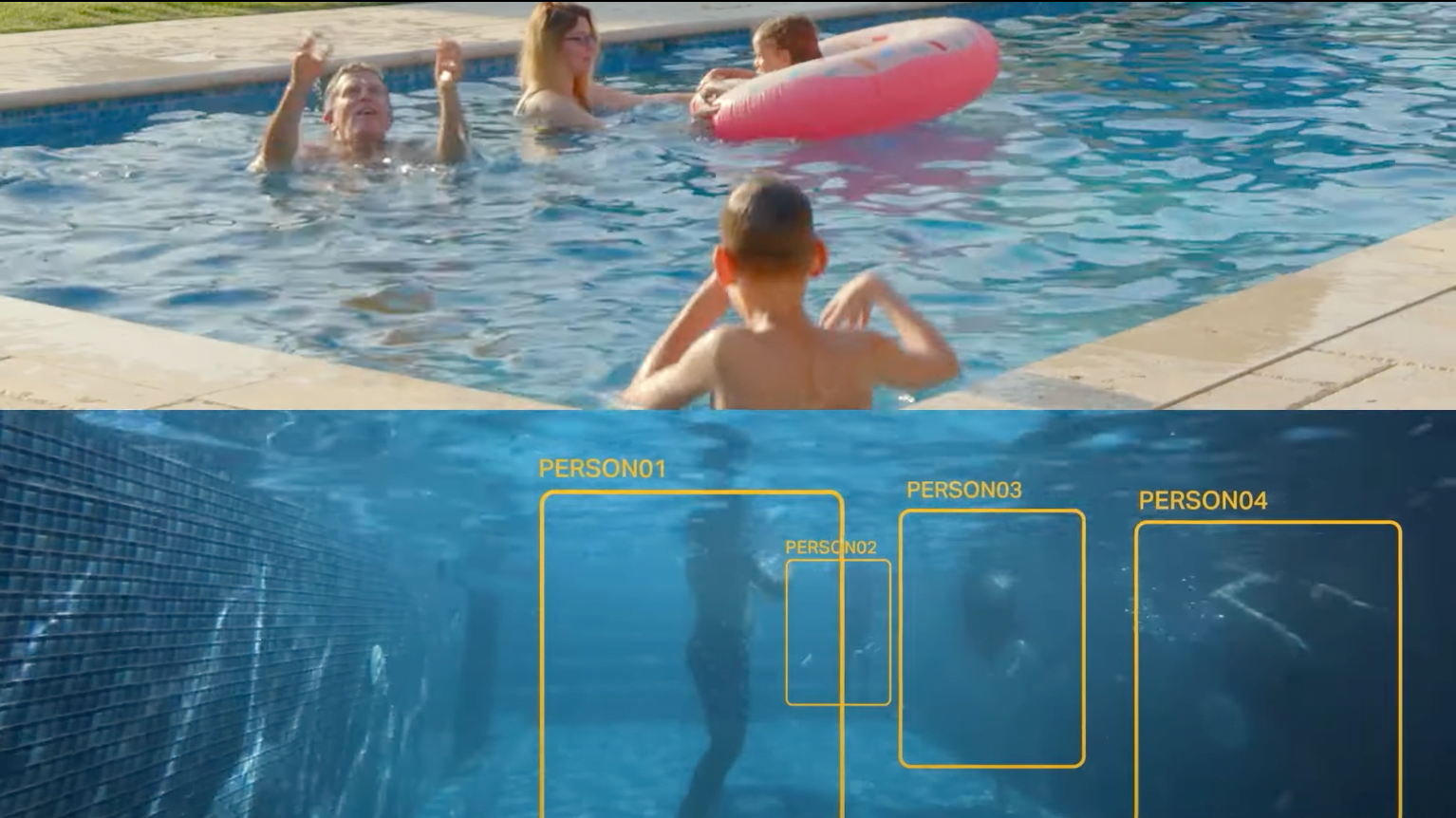
AI pool drowning detection uses computer vision and machine learning to analyze how a person is moving in the water, tracking posture, motion, and time spent submerged, rather than just detecting that the water's surface was disturbed. Above-water and underwater cameras feed live video into algorithms trained to recognize the specific pattern of distress: prolonged submersion, lack of purposeful motion, or behavior consistent with the Instinctive Drowning Response described above. Because the system is analyzing behavior rather than simple movement, it can distinguish normal swimming from a real emergency, which is why these systems are reported to produce fewer false alarms than motion-based sensors, and can flag concerns within seconds rather than the 7 to 30 second lag (or longer) documented in conventional alarms.
Where This Technology Is Being Used
AI drowning detection isn't limited to private villas. It's increasingly used in:
- Residential pools, especially where children or elderly household members swim.
- Hotels and resorts, as a layer supporting existing lifeguard coverage.
- Public swimming pools and water parks, where multiple swimmers make constant manual supervision harder.
- Fitness clubs and schools running swim programs.
Does This Replace Supervision or Pool Fencing?
No, and it shouldn't be sold as if it does. AI detection is an additional layer of protection, not a substitute for adult supervision, pool fencing, or swim lessons. Its value is catching the specific gap those other measures don't cover: the seconds between someone going quietly under and a human noticing, especially in a multi-swimmer environment or when supervision briefly lapses, which is when most of these incidents actually happen.
Frequently Asked Questions
What does drowning actually look like?
Real drowning rarely involves splashing or shouting. Documented as the Instinctive Drowning Response, it typically looks like quiet bobbing at the surface for 20 to 60 seconds as a person tries and fails to get their head above water, which is often mistaken for play by untrained observers.
Why do traditional pool alarms sometimes fail to catch drowning?
Studies of traditional pool alarms found response times ranging from 7 to 30 seconds even when functioning correctly, and some units failed to trigger for up to two minutes after someone entered the water. Motion and surface sensors are also prone to false alarms from wind, pets, or pool equipment, which leads some owners to disable them.
Do AI pool safety systems have false alarms?
AI systems that analyze behavior and posture rather than just water disturbance generally produce fewer false alarms than motion-based sensors, since they can distinguish normal swimming from signs of distress.
Does AI drowning detection replace supervision or pool fencing?
No. AI detection is an additional layer of protection, not a substitute for adult supervision, pool fencing, or swim lessons. It's designed to catch what supervision alone sometimes misses, not to replace it.
InterKraft supplies and installs Mylo AI Pool Drowning Detection, our own implementation of this technology, for villas, hotels, and residential communities across the UAE.
Emma Davis
This is such an eye-opening article! As a parent of young children who love swimming, the idea of an AI system that can detect silent drowning within seconds is incredibly reassuring. We recently had an AI drowning detection system installed at our home pool and the peace of mind it provides is priceless. Every pool owner should consider this.
Liam Brown
We manage a mid-sized hotel with a pool and this article really highlights why we chose to upgrade our safety measures with AI detection. The ability to distinguish between normal swimming behaviour and genuine distress — without constant false alarms — is what sets these systems apart from traditional pool alarms. Highly recommend for any commercial pool operator.
Olivia Wilson
I never realised that drowning can begin in as little as 20 seconds — that statistic alone convinced me to look into AI pool safety. The fact that these systems work 24/7 without distraction, monitoring both above and below the water surface, makes them far superior to relying solely on lifeguards. A truly essential read for anyone responsible for pool safety!