
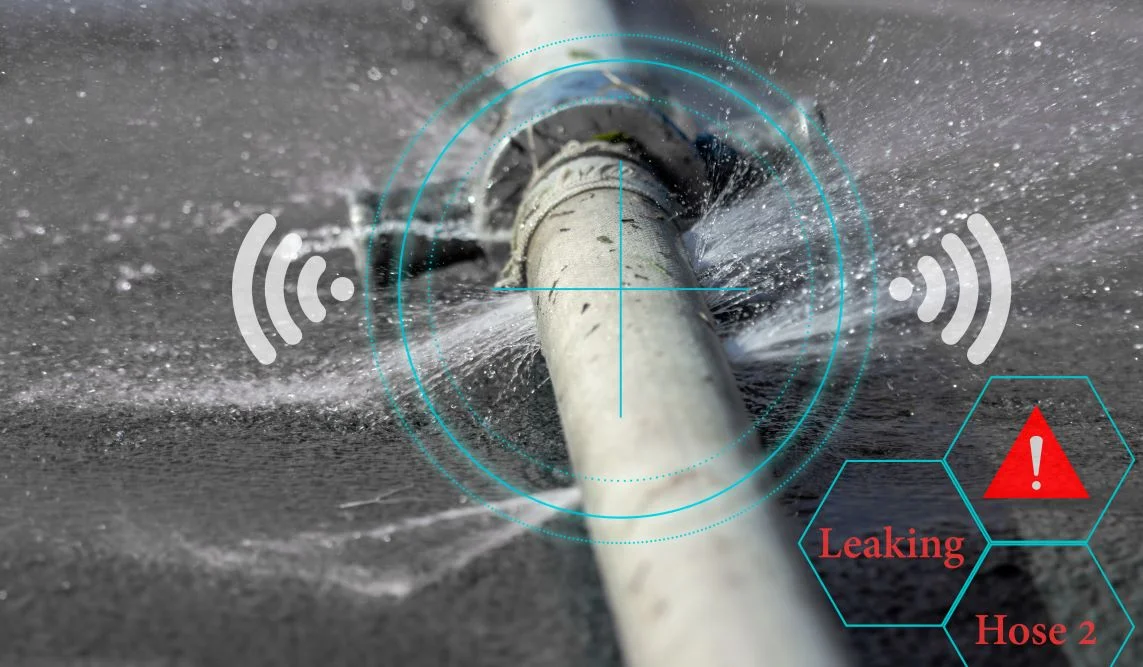
Why Water Leaks Go Undetected for Weeks (And What Actually Catches Them)
A facility manager at a 400,000 square foot commercial complex discovered a leak behind a mechanical room wall only after water consumption had already climbed 340% above baseline. By the time anyone noticed, the leak had been running for 11 weeks, costing $127,000 in a single quarter before it was found, with structural damage that had already spread across three floors. Total remediation costs went on to exceed $850,000. Nobody was negligent here. The problem was that nothing was actually watching for it until the damage was visible.
Why Leaks Go Undetected for Weeks or Months
Most water systems rely on monthly utility bills or visible signs, a wet patch, a mold smell, warped flooring, to reveal that something's wrong. Both are lagging indicators. The U.S. EPA estimates that household leaks waste close to a trillion gallons of water annually across the country, with an average leaking household losing over 10,000 gallons a year, and a large share of that runs through pipes hidden behind walls, under floors, or underground, where nobody can see it happening.
Why Traditional Leak Detection Has Blind Spots
Simple wet-sensor pads only trigger when water physically touches them, so a leak inside a wall cavity or under a slab can run indefinitely without ever reaching the sensor. Pressure-based systems have a different gap: a slow, "silent" leak doesn't always produce a noticeable drop in head pressure, which is exactly the kind of leak that goes unnoticed the longest. There's also a behavioral problem that undermines both approaches: frequent false alarms cause people to start ignoring the warnings altogether, which defeats the purpose of having a detection system in the first place.
How AI-Based Flow Analysis Actually Differs
AI-based water leakage detection uses intelligent sensors combined with machine learning to monitor flow patterns continuously, rather than waiting for a fixed threshold or a physical sensor to get wet. By learning what normal usage actually looks like for a specific property, the system can flag a deviation, water running at 2am when nobody's home, a slow but steady increase in baseline consumption, as an anomaly worth investigating, well before it shows up as a wet patch or a shocking utility bill. Because it's analyzing usage behavior rather than a single trigger point, this approach also tends to produce fewer false alarms than simple threshold-based sensors.
What This Actually Prevents
Catching a leak in its first days rather than its eleventh week is the difference between a repair and a remediation project. Beyond the immediate water waste and utility cost, undetected leaks lead to structural damage, mold growth, and in commercial settings, operational downtime. Insurance is a factor too: water damage claims are common, but insurers increasingly expect evidence that reasonable monitoring was in place, and a claim tied to an 11-week undetected leak looks very different to an insurer than one caught on day one.
Where This Matters Most
AI water leakage detection is relevant across a wide range of properties:
- Residential homes and apartments.
- Hotels and hospitality properties.
- Commercial buildings and offices.
- Industrial facilities and warehouses.
- Hospitals and healthcare centres.
The common thread isn't the type of building, it's that in all of these settings, nobody is physically watching the pipes behind the walls, which is exactly the gap this technology is built to cover.
Frequently Asked Questions
How much water do undetected leaks actually waste?
The U.S. EPA estimates household leaks waste close to a trillion gallons of water annually across the country, with an average leaking household losing over 10,000 gallons a year. The exact figures vary by region, but the underlying pattern, that leaks quietly waste far more than people expect, holds broadly true.
Why do traditional leak sensors miss hidden leaks?
Simple wet-sensor pads only trigger when water physically touches them, so a leak inside a wall or underground can go undetected indefinitely. Pressure-based systems can also miss slow, silent leaks that don't produce a noticeable pressure drop.
Do leak detection systems have false alarms?
Yes, and it's a real problem: frequent false alarms cause people to start ignoring warnings over time, which defeats the purpose of having the system in the first place. Systems that analyze usage patterns rather than a single threshold tend to produce fewer false alarms.
Does AI leak detection replace a plumber?
No. It flags that something is wrong and roughly where, so a plumber can be brought in quickly and precisely, rather than replacing the need for one.
InterKraft supplies and installs AI water leakage detection for residential, commercial, and industrial properties across the UAE.
Emma Davis
This article was such an eye-opener! I never realized how much damage a small, undetected water leak could cause over time. The section on real-time monitoring and mobile alerts is especially useful — I've already started looking into AI leak detection systems for my home. Thank you for making such a technical topic so easy to understand!
Liam Brown
The predictive maintenance feature really stood out to me. As a facility manager overseeing a large commercial building, unexpected leaks have always been a costly headache. Knowing that AI systems can forecast potential risks before they escalate is a game changer. This is exactly the kind of proactive solution we've been looking for!
Olivia Wilson
I had no idea that AI-powered leak detection systems could integrate so seamlessly with existing smart home setups! The point about water conservation really resonated with me — with rising water costs and growing environmental concerns, investing in smart leak detection feels like a responsible and practical choice. Brilliant article, highly recommend it to every homeowner!